
Water After Heavy Rain
Puddles, wall seepage, or wet floor edges after storms often point to runoff, drainage, or hydrostatic-pressure problems.

Control unwanted water at its source with a practical plan based on the property, drainage conditions, and the signs of moisture already present.
Effective waterproofing Atlanta Georgia properties begins with finding how water gets in. A damp wall may result from surface runoff, a foundation crack, hydrostatic pressure, failed sealant, or condensation. Treating the visible stain without identifying the source often leaves the underlying problem in place.
Foundation Repair Atlanta Georgia evaluates the building exterior, grading, downspout discharge, visible cracks, wall and floor joints, and interior moisture patterns. Based on what we find, an experienced foundation team in Atlanta, GA matches the work to the water path rather than relying on one standard treatment for every building.
Atlanta receives substantial rainfall throughout the year, including intense storms that can put drainage systems under sudden pressure. Sloped lots and dense development can also change how runoff moves around a structure. The practical goal is to collect, redirect, drain, or block water before it damages finishes and creates persistent damp conditions.

A waterproofing plan may use exterior water management, interior drainage, crack sealing, protective coatings, or a combination of methods. The correct approach depends on where water enters and whether the pressure comes from the surface or surrounding soil.
Exterior work may include correcting low areas near the structure, extending downspout discharge, sealing penetrations, applying a waterproof membrane, and installing footing-level drainage where excavation is appropriate. Interior systems can collect water at the wall and floor perimeter and direct it to a sump basin. A sump pump then moves that water to an approved discharge point.
Crawl-space work can include sealing ground moisture with a durable vapor barrier, closing gaps, managing drainage, and controlling humidity. Masonry walls, poured concrete, concrete block, and brick veneer assemblies each require suitable materials and detailing. Paint alone is rarely an adequate response to active seepage or water pressure.
Puddles, wall seepage, or wet floor edges after storms often point to runoff, drainage, or hydrostatic-pressure problems.
Chalky efflorescence on masonry forms when moisture moves through the material and leaves dissolved salts behind.
Persistent odors, condensation, and damp air can indicate ground moisture, hidden seepage, or poor moisture control.
Water may enter through wall cracks, pipe penetrations, mortar joints, or the cove joint where a wall meets the slab.
Bubbling paint or flaking coatings may mean moisture pressure is pushing through the wall instead of being managed outside it.
Wet soil, damp insulation, standing water, or condensation beneath the floor calls for an inspection of drainage and vapor control.
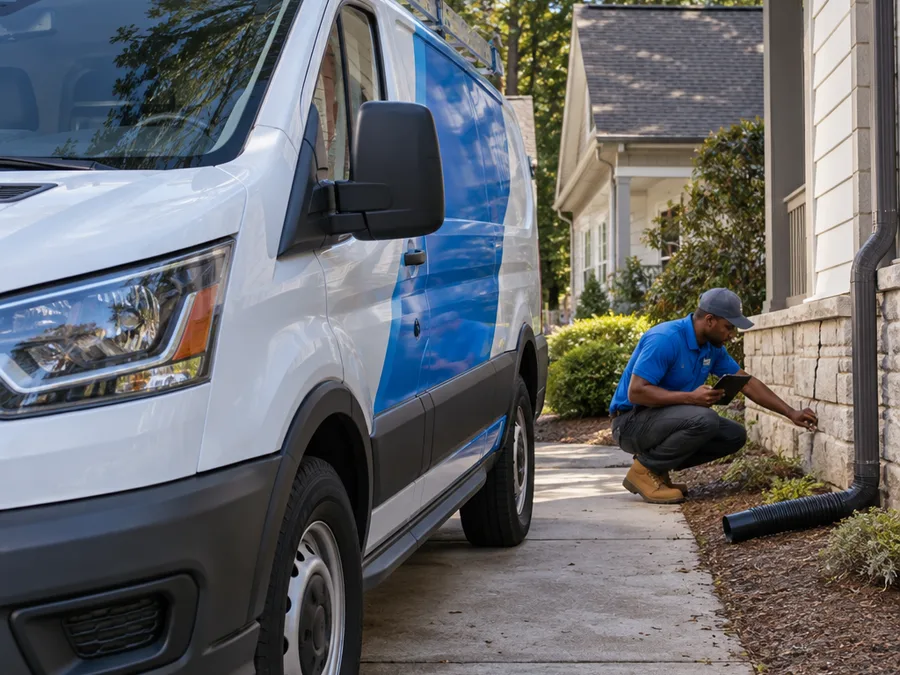
Atlanta waterproofing is property-specific because construction and terrain vary across the metro area. In Grant Park, many older homes have masonry foundation details that require careful inspection before coatings or drainage systems are selected. Virginia-Highland also has older housing stock, where additions and past alterations can create several possible water-entry points.
Parts of Buckhead have rolling terrain, so runoff direction and uphill drainage deserve close attention. In flatter areas of East Point, the condition and discharge route of gutters and downspouts can have a major effect on water collecting near a structure. Decatur combines older homes with established tree cover; roots, buried drain lines, and limited exterior access may affect how work is planned.
These traits do not determine the treatment by themselves. The inspection still needs to trace staining, check elevations, review drainage routes, and distinguish groundwater seepage from plumbing leaks or indoor condensation.
We review moisture patterns, cracks, joints, penetrations, grading, gutters, downspouts, and visible drainage conditions. Recent photos of seepage can help when the area has dried before the visit.
We separate surface runoff, subsurface pressure, wall penetration, ground vapor, plumbing leaks, and condensation because each requires a different response.
The proposed work identifies the treatment area, drainage route, materials, access needs, expected disruption, and any preparation required before installation.
Depending on the diagnosis, work may involve crack repair, membranes, perimeter drains, sump equipment, vapor barriers, discharge improvements, or targeted exterior corrections.
We explain how the completed system works and what should be checked over time, such as sump-pump operation, discharge outlets, gutters, and downspout extensions.
Waterproofing in Atlanta typically ranges from about $2,000 to $8,000 for many targeted or interior drainage projects, while extensive excavation and exterior membrane work can exceed $15,000. Small crack repairs or drainage corrections may cost less.
Price changes with the water source, treatment length, excavation depth, wall material, sump equipment, access, finished-room removal, and discharge requirements. Combining several methods also raises the scope. These are general market ranges rather than a quote; the exact cost is confirmed after an on-property inspection.
A reliable proposal should explain what was observed, why a specific method is recommended, and where collected water will go. Ask whether the scope addresses exterior runoff, subsurface water, vapor, or a combination. Also ask what finishes must be removed, how dust and debris will be managed, and which components need routine maintenance.
Be cautious when a recommendation is based only on a damp spot viewed indoors. For example, sealing an interior crack can be appropriate for isolated leakage, but it will not correct water pooling against the exterior wall. Likewise, a dehumidifier can reduce airborne moisture, but it does not stop active seepage.
Foundation Repair Atlanta Georgia provides a clear scope based on observed conditions. The aim is a repair that fits the structure and gives water a controlled path away from vulnerable areas.
Address recurring dampness before new finishes hide the evidence. Arrange an inspection and get a written plan based on the actual water source.
Call (470) 934-3230The right method depends on the source, access, and pressure behind the water. Exterior membranes and footing drains intercept water before it passes through a wall, while interior perimeter drains manage water after it reaches the foundation. Atlanta properties with tight side yards, additions, porches, or mature landscaping may have limited excavation access, making an interior system more practical in some cases.
Many targeted crack repairs or small drainage corrections can be completed within a day, while perimeter systems and exterior excavation commonly require several working days. The schedule depends on treatment length, demolition, soil access, weather, curing time, and restoration. Rain can delay excavation and coating work because surfaces and soil must be suitable for installation.
Waterproofing can remove a moisture source, but existing mold may require separate cleaning or remediation. Active leaks, wet masonry, and high humidity support microbial growth. The plan should first stop or manage the incoming water, then dry the area and address affected materials according to their condition.
A coating may help with light vapor transmission or dampness, but it usually cannot resist active leakage or substantial hydrostatic pressure by itself. Water entering through cracks, the cove joint, or saturated soil often requires drainage, crack repair, exterior membrane work, or a combined approach.
Homeowners insurance often excludes maintenance problems and groundwater seepage, although coverage may apply when water damage results from a covered sudden event. Policies differ, so review the cause of loss and speak with your insurer before work begins. Keep photos, inspection findings, and the written waterproofing scope for your records.
Yes, but some finishes may need to be removed to reach foundation walls, cracks, or the slab perimeter. Baseboards, drywall, flooring, and built-ins can affect access. The scope should state what will be removed, what the waterproofing contractor will replace, and what requires a separate finishing trade.
Clear stored items from damp walls and collect photos showing conditions during or soon after rain. Note when the water appears, where it starts, and whether a sump pump or buried drain is present. Do not cover stains immediately before the visit because the pattern can help identify the entry route.
Tell us where and when moisture appears. We will assess the conditions, explain suitable waterproofing methods, and prepare a scope for your Atlanta property.